


Preventing Cold Drafts in Glass-Heavy Rooms with Curtains

Unveiling the Truth Behind Cold Drafts in Glass Rooms
Glass rooms offer stunning views but present unique thermal challenges that standard solutions can't address.
- • Radiant Heat Loss: Glass inherently has a low thermal resistance (R-value), meaning it acts more like a conductor than an insulator, allowing precious indoor heat to escape.
- • Convective Down-Drafts: Even with double glazing, air near a cold window pane cools and sinks. This creates a continuous flow of cold air along the floor, often mistaken for a mechanical draft.
- • Air Infiltration: In older properties, imperfect seals allow outdoor air to seep in directly. In these cases, thermal insulation curtains serve as an essential secondary barrier to maintain comfort.
How Curtains Become Shields Against the Cold
Strategic curtain selection and installation creates an effective thermal barrier that significantly improves comfort in glass-heavy spaces without sacrificing your views or natural light when desired.
- Static Air Buffer: By trapping a layer of still air between the fabric and the window, these curtains create a powerful thermal buffer that neutralizes the "cold zone" near the glass.
- High-Density Construction: Our curtains feature a high-density, 385 GSM tight-weave fabric, providing a heavy-duty physical barrier that stops cold drafts in their tracks.
- Heat Radiation Retention: Equipped with specialized linings, the curtains reflect indoor warmth back into the room, significantly reducing the energy lost through window panes.
- Wool & Velvet Materials: Our wool and velvet curtains provide superior heat retention for glass rooms. Wool's crimp structure traps warm air, while velvet's dense pile offers exceptional thermal resistance.
Customized Draft Prevention Solutions for Glass Rooms

Scott Heavyweight Soft Checked Curtains
- ✓ Textured Jacquard
- ✓ Warmth and Softness
- ✓ High-quality Materials
- ✓ 55%-65% Light Filtering
- ✓ 70%-90% Room Dakeing
From $134.20

Darcy Micro Pearlescent Look Curtains
- ✓ Luxurious Silk-Like Sheen with Easy Care
- ✓ Long-Lasting Color and UV Resistance
- ✓ Low Moisture Absorption and Mold Resistance
- ✓ Durable and Abrasion-Resistant
From $90.68
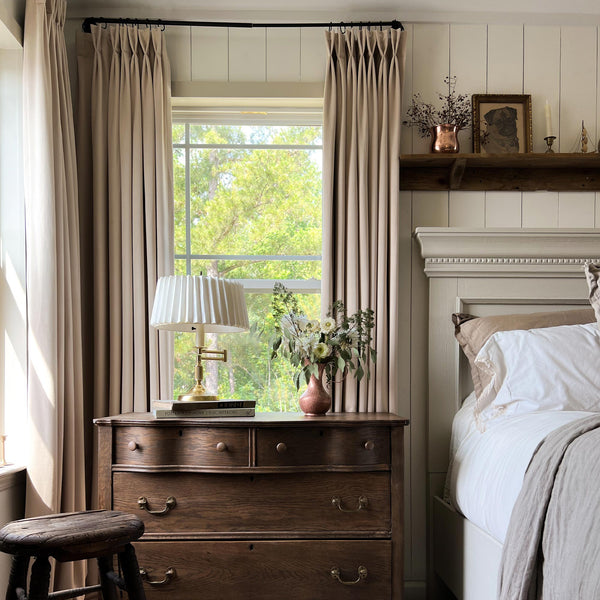
Elma Soft Blackout Velvet Curtains
- ✓ High Quality Fabric
- ✓ Reduce Noise and Cold/Hot
- ✓ 420 GSM Weight
- ✓ Room Darkening
From $108.53

Vivienne Chenille Texture Curtains
- ✓ Soft Touc
- ✓ Scratch-resistant
- ✓ Premium Fabric Weight
- ✓ Luxuriously Tactile Refined
From $112.67
Winter Home Curtain Selection Expert Tips

Essential Guidelines for Optimal Thermal Performance
-
Fabric and Layers
Seek out curtains explicitly labeled as "thermal insulated" or "multi-layered." Heavy fabrics like polyester, velvet, or suede are often good indicators.
-
Front Color Strategy
In winter, a darker-colored curtain can help absorb heat from the sun when opened. In summer, a lighter color will reflect even more light.
-
Size Matters—A Lot!
The total width of your curtain panels should be 2 to 2.5 times the width of your window. This ensures they have full, dense pleats when closed, which is crucial for trapping air. For the best seal, the curtains should be long enough to touch the windowsill or the floor.
-
Header Type (The Top of the Curtain)
Grommet tops are easy to install but can leave gaps where air and light leak through. Back tab and pinch pleat styles sit closer to the rod and wall, creating a much better seal against drafts.
Hear from Customers Who Feel Warmer in Winter
Why Choose Curtarra's Thermal Insulation Solutions?

Triple-Layer Thermal Technology

Industrial-Grade Precision

Full-Performance Fabrics

Free Measurement Tool
Common Questions About Draft-Blocking Curtains
Find answers to frequently asked questions about choosing and maximizing the performance of thermal window treatments.
Can cold draft curtains completely eliminate drafts?
While cold draft curtains cannot 100% eliminate all air movement, they significantly reduce thermal transfer through three mechanisms: blocking convection currents, reducing radiation heat loss, and minimizing conduction through the glass surface. They represent the most economically effective solution for improving comfort without structural modifications.
How much can thermal curtains actually reduce my heating costs?
According to the U.S. Department of Energy, medium-colored draperies with a white plastic backing can reduce window heat loss by up to 33% in cold climates. This means your heating system works less, saving you money.
What's the best way to clean insulated curtains without damaging their thermal properties?
Most insulated curtains require gentle cleaning to maintain their thermal properties. We recommend vacuum dusting regularly using a brush attachment on low power. For deeper cleaning, check manufacturer instructions—many premium insulated curtains are dry-clean only as machine washing can damage thermal linings.
Perfect Winter Curtain Solutions for Any Space

Do Thermal Curtains Really Make a Difference?
Discover how quality cold draft curtains reduce heat loss through glass windows and doors, lower heating bills, and keep your home warmer. Learn the science behind thermal insulation and see real-world evidence of effectiveness.

Differences between Blackout Curtains and Thermal Curtains
Understand how blackout and thermal curtains serve different purposes—while blackout curtains block light and provide privacy, thermal curtains excel at reducing heat loss and preventing cold drafts.

Room Darkening Curtains Vs. Blackout Curtains: What’s the Difference?
Room darkening curtains filter 95-99% of light for a dimmed ambiance, while blackout curtains block 100% with specialized linings for complete darkness.


